
Van Routes Through the Serra de Tramuntana
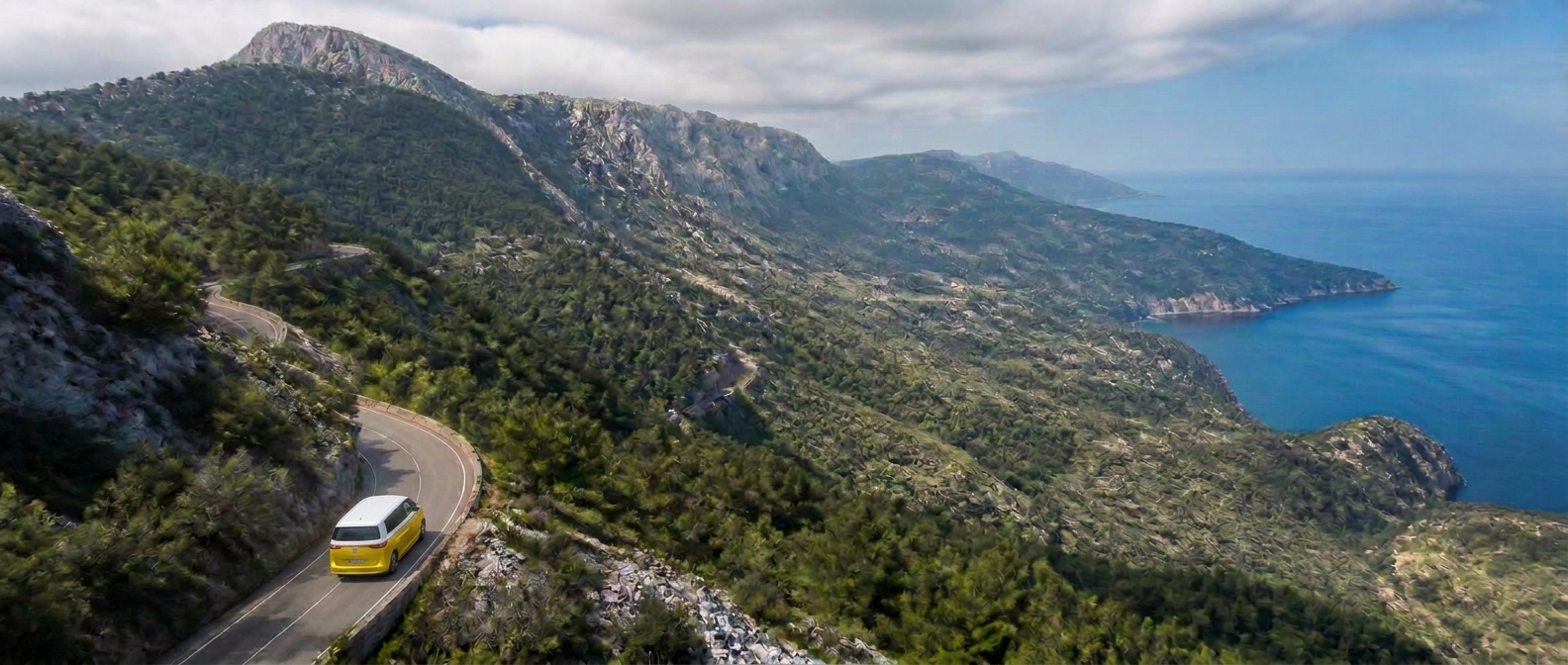
The Serra de Tramuntana is a UNESCO World Heritage site and, on top of that, the perfect excuse to spend a whole day behind the wheel without watching the clock. A hundred and ten kilometres of mountain road, the Ma-10, link Andratx with Pollença via stone villages, sea-view lookouts and centuries-old olive terraces.
Driving it in a fully electric seven-seater van changes the trip completely: the climbs stop being an engine roar and the descents feed battery back into the car while you listen to the wind through the pines. This is the route we drive ourselves, and the one we recommend to anyone renting with Miisla Vans.
Leaving Palma: first stop in Valldemossa
From Palma de Mallorca it's just over half an hour to Valldemossa. We recommend leaving early, before nine, because the village fills up by mid-morning and the car parks at the entrance run out of space. With a large van it's best to leave it in the roadside car park and walk in: five minutes and you avoid the narrow streets of the old town.
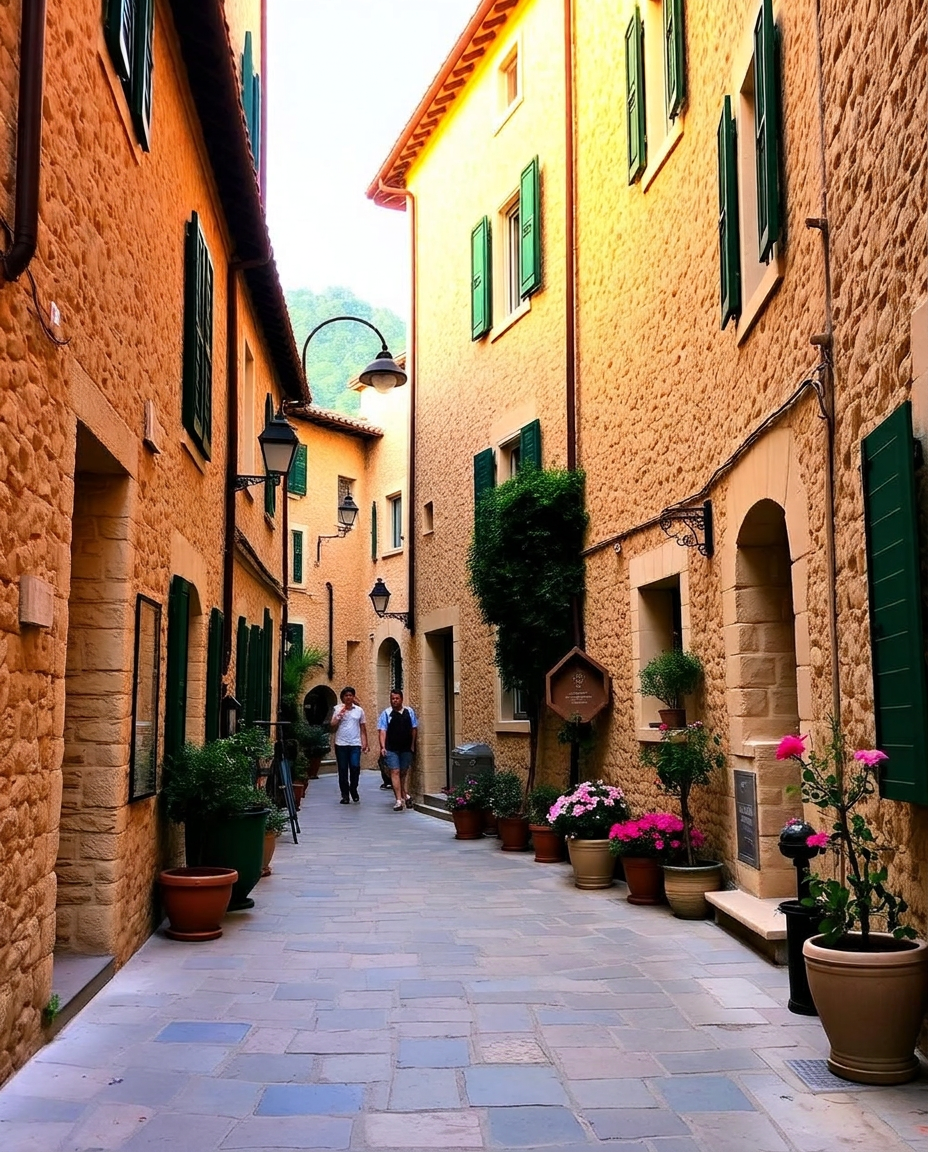
Valldemossa is best explored slowly: the Cartuja monastery, cobbled streets lined with flower pots, and a freshly made coca de patata for breakfast. It's a good place to stretch your legs before the more demanding part of the day, and there are public chargers near the centre if you want to start the route at 100%.
Deià and the stretch with Mallorca's best views
Between Valldemossa and Deià lies, in our view, the island's most beautiful stretch. The road hugs the cliffside, lookout points appear every few kilometres and the sea is always visible a few hundred metres below. With kids in the back it's a forgiving drive because stops are constant and none of them last too long.
Deià is tiny and extremely photogenic: terraced stone houses, a cemetery with sea views and a handful of art galleries. If swimming is on the plan, Cala Deià is a few minutes away down a very narrow road; with a van it's better to park up top and walk down or follow the local signs.
This is where travelling electric really shows: on a road of tight bends, with no gear changes or vibration, the drive is smooth and passengers in the back get far less carsick than in a conventional car.
Sóller, the Port and the tram option
Sóller is the natural midday stop. The square, the market and the terraces shaded by plane trees call for an unhurried meal. From there you can leave the van parked and hop on the historic tram down to Port de Sóller: a twenty-minute ride that kids love, and it saves you the hunt for parking near the harbour in peak season.
The Port has a sheltered bay, calm water and several chargers. It's the ideal place to plug in while you eat or swim, so the second half of the day starts with plenty of range to spare.
Sa Calobra and the Torrent de Pareis: only if you take it slow
The Sa Calobra road is one of the most famous in Europe: fourteen kilometres of descent with hairpin bends, including the famous Nudo de la Corbata switchback. It's spectacular, but let's be honest: with a seven-seater van it's best taken calmly, driven slowly, avoiding the busiest coach-traffic hours between eleven and two.
The reward is the Torrent de Pareis, a gorge that opens onto a pebble beach wedged between vertical walls. The climb back up is long and steady; in an electric van it's surprisingly comfortable, and much of the energy spent going up is recovered through regenerative braking on the following descent towards Pollença.
If you're travelling with small children or the day has run long, a calmer alternative is to continue along the Ma-10 to the Mirador d'Es Colomer and finish in Pollença, climbing up to the Calvari at sunset.
Practical tips for driving the route electric
Plan for two charges: one before leaving Palma and another during the lunch stop. That way the whole route is done with zero range anxiety, even with the car full of people and luggage.
Bring water, caps and comfortable shoes: almost every stop involves a bit of walking. And save the back row seats for whoever gets carsick least, since the Ma-10's bends are constant.
If you only have one day, don't try to do it all. Valldemossa, Deià and Sóller make a perfect day; Sa Calobra and Pollença deserve a separate one. The Tramuntana is best enjoyed by stopping, not by rushing through it.